

Phentermine vs. GLP-1 Injections: What’s the Real Difference?
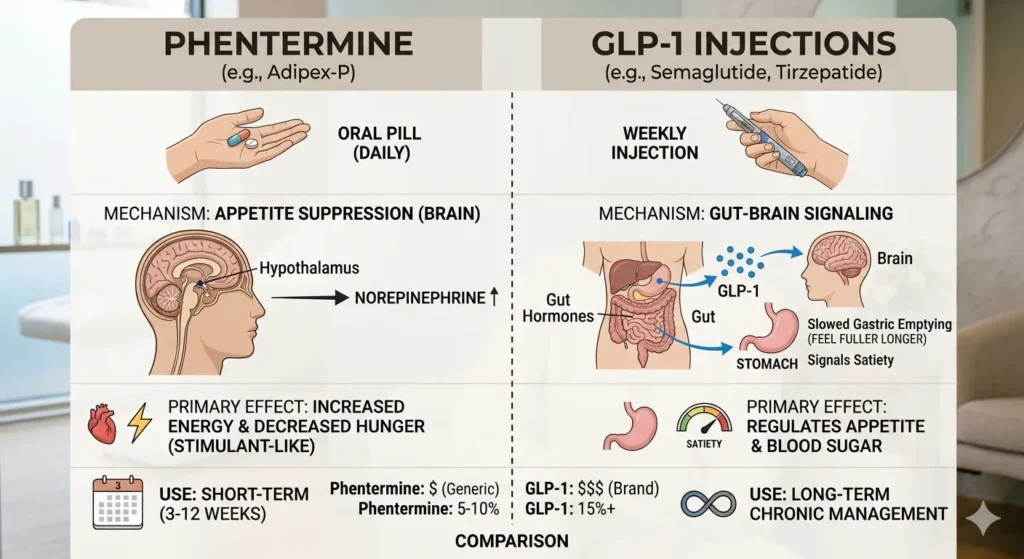
When it comes to medical weight loss, two options are getting a lot of attention right now: phentermine vs. GLP-1 injections like semaglutide and tirzepatide. If you’re trying to decide between them, you’re not alone.
Both approaches can help with weight loss, but they work in very different ways. Understanding those differences is key to choosing what actually fits your body, lifestyle, and long-term goals.
Let’s break it down in simple terms.
What Is Phentermine?
Phentermine is a prescription weight loss pill that has been used for decades. It works as an appetite suppressant by stimulating the central nervous system.
How it works:
- Reduces hunger signals in your brain
- Helps you eat less throughout the day
- Increases energy levels slightly
It’s often prescribed for short-term use, typically a few weeks to a few months.
Common brand names:
- Adipex-P
- Lomaira
What Are GLP-1 Injections?
GLP-1 medications are a newer class of weight loss treatments. These include drugs like:
- Semaglutide (commonly known as Ozempic or Wegovy)
- Tirzepatide (Mounjaro or Zepbound)
These are usually taken as weekly injections.
How they work:
- Slow down digestion (you feel full longer)
- Reduce appetite
- Help regulate blood sugar levels
- Improve insulin response
Unlike phentermine, GLP-1s focus on hormonal regulation, not just appetite suppression.
Phentermine vs GLP-1: Key Differences
1. Mechanism of Action
- Phentermine: Stimulates the brain to suppress appetite
- GLP-1 injections: Mimic natural hormones that control hunger and fullness
This is the biggest difference. One is stimulant-based, the other is hormone-based.
2. Effectiveness for Weight Loss
- Phentermine:
Average weight loss is around 5–10% of body weight - GLP-1 medications:
Can lead to 10–20% (or more) weight loss in many patients
GLP-1s generally produce more significant and sustained results.
3. Duration of Use
- Phentermine: Short-term use
- GLP-1 injections: Long-term treatment
GLP-1 medications are designed for ongoing weight management, not quick fixes.
4. Side Effects
Phentermine side effects:
- Increased heart rate
- Insomnia
- Dry mouth
- Anxiety
GLP-1 side effects:
- Nausea
- Vomiting
- Digestive discomfort
- Mild fatigue
Phentermine can feel more intense due to its stimulant nature.
5. Administration
- Phentermine: Daily pill
- GLP-1: Weekly injection
Some people prefer pills, while others like the convenience of once-weekly dosing.
6. Who It’s Best For
Phentermine may be better if:
- You want short-term weight loss support
- You need appetite control quickly
- You prefer oral medication
GLP-1 injections may be better if:
- You’re looking for long-term results
- You struggle with cravings and overeating
- You have insulin resistance or prediabetes
Phentermine vs Semaglutide (Ozempic/Wegovy)
This is one of the most searched comparisons.
- Semaglutide works gradually and targets appetite hormones
- Phentermine works immediately but doesn’t address metabolic factors
If you’re asking, “Is semaglutide better than phentermine for weight loss?”
In most cases, yes for long-term results, but it depends on your goals.
Phentermine vs Tirzepatide (Mounjaro/Zepbound)
Tirzepatide is even more advanced because it targets two hormones (GLP-1 + GIP).
- Produces higher weight loss results than many alternatives
- Helps with appetite, blood sugar, and fat metabolism
Compared to phentermine, tirzepatide is usually more effective but also more complex and long-term.
Can You Take Phentermine with GLP-1 Medications?
This is a common question.
In some cases, providers may combine treatments, but it must be done under strict medical supervision.
You should never mix medications like phentermine and Mounjaro or Ozempic on your own.
Is Phentermine a GLP-1 Medication?
No.
Phentermine is not a GLP-1 drug.
They belong to completely different categories:
- Phentermine = stimulant appetite suppressant
- GLP-1 = hormone-based metabolic treatment
Which One Should You Choose?
There’s no one-size-fits-all answer.
Choose phentermine if:
- You need a quick start
- You’re okay with short-term use
- You want a lower-cost option
Choose GLP-1 injections if:
- You want sustainable weight loss
- You struggle with long-term appetite control
- You’re focused on overall metabolic health
FAQs about Phentermine vs. GLP-1 Injections
Is phentermine the same as Ozempic?
No, they are completely different. Phentermine is a stimulant, while Ozempic is a hormone-based injection.
Is Ozempic better than phentermine for weight loss?
Ozempic often leads to more sustainable and significant weight loss, especially over the long term.
Can I take phentermine with Ozempic?
Only under medical supervision. Combining them without guidance can be unsafe.
Is Wegovy better than phentermine?
Wegovy is generally better for long-term weight loss and maintenance, while phentermine is better for short-term use.
Are there injections like phentermine?
Not exactly. Phentermine is a pill. Injections like semaglutide or tirzepatide work differently.
What is a better alternative to phentermine?
GLP-1 medications like semaglutide or tirzepatide are considered more advanced alternatives for long-term weight loss.
Can you take phentermine with Mounjaro?
It may be possible in certain cases, but only with medical supervision.
Final Thoughts
Both phentermine and GLP-1 medications can help you lose weight, but they serve different purposes.
- Phentermine is more of a short-term boost
- GLP-1 injections are a long-term strategy
The best choice depends on your health history, goals, and how your body responds to treatment.
If you’re unsure, the smartest move is to consult a medical weight loss specialist who can guide you based on your specific needs.